From a picnic table in St. Paul’s Frogtown, a 21-year-old woman looked around a park. There were people of all ages eating hot dogs and hamburgers, little kids petting police horses and slightly older ones tossing a football with St. Paul officers.
“Nowadays, with people our age, it’s instilled in kids’ heads that cops are bad people,” Carter said. “So it’s good to see the children getting to see that they’re normal people.”
Safe Summer Nights events are scheduled each Thursday in St. Paul.
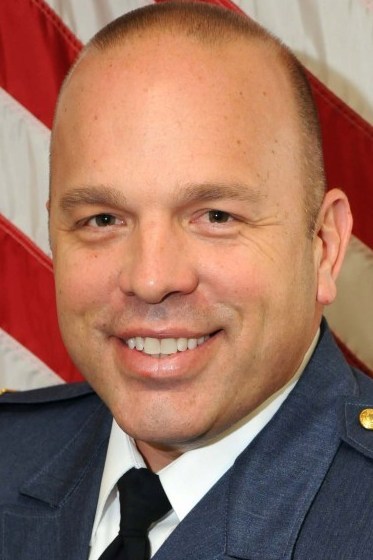
Todd Axtell (Courtesy photo)
The one Carter attended happened at the end of June, before long-standing tensions between communities of color and law enforcement became even more pronounced when a St. Anthony police officer fatally shot Philando Castile, who was African-American, in a Falcon Heights traffic stop.
The community’s concern over cases like Castile’s especially illustrates why Safe Summer Nights is important, said St. Paul Police Chief Todd Axtell. The idea of the weekly community cookouts in St. Paul is bringing police officers and residents together to get acquainted over a meal, rather than in times of trouble.
A REASON TO GATHER
Tom Campion approached Axtell with the idea for Safe Summer Nights in 2014.
Campion is a partner in the food wholesaler Superb Meats, based on St. Paul’s West Seventh street, and he offered to donate food and find volunteers. He thought officers could knock on doors in the areas they patrol and invite residents to the cookouts.
“It starts there — they get to have a different conversation, rather than being there with an arrest warrant or for a DWI,” Campion said. “They get to go up and say, ‘Hey, come join us for a barbecue.’ ”
And, after working in the food business for 39 years, Campion said he also knew that “no matter what color, creed or race, food is always a common denominator to get people together.”
Tang Yang and her family went to the Safe Summer Nights at Ryan Park after an officer dropped off a flyer about it at their nearby home.
“I think it’s pretty awesome to get the community to come together like this,” said Yang, who had never heard of the events before.
MORE THAN FOOD
Since its start, Safe Summer Nights has served about 35,000 meals in St. Paul, Axtell said.
And after the first successful summer, Safe Summer Nights became a nonprofit organization and received funding from the Otto Bremer Foundation, Campion said.
They’ve also held the community-police barbecues in Minneapolis, Eagan, Burnsville, Columbia Heights and elsewhere. Still, every Thursday they’re back in St. Paul at a different location each week.
The events are more than food and conversation. St. Paul Parks and Recreation sets up its 30-foot-tall climbing wall and a bouncy house. The St. Paul Fire Department has set up a display showing how to prevent kitchen fires and how to react to a grease fire. There are also police motorcycles, the bomb squad and other equipment on display.
At Ryan Park, Axtell said he talked to two young girls from the neighborhood. They told the police chief they want to become police officers.
“We want to first of all build relationships, but also have the potential to hire a more diverse work force and become more reflective of our community,” Axtell said. “These interactions, they build relationships. People become proud of our officers and then they really want to emulate that.”
IF YOU GO
Safe Summer Nights barbecues are scheduled each Thursday, 5-7 p.m., in St. Paul. The ones left for this summer are:
Thursday, Rice Street Recreation Center, 1021 Marion St.
Aug. 4, Hazel Park Recreation Center, 945 N. Hazel St.
Aug. 11, Dunning Recreation Center, 1221 Marshall Ave.
Aug. 18, Neighborhood House, 179 E. Robie St.
Aug. 25, Conway Recreation Center, 2090 Conway St.
http://stpaulpolicefoundation.sbstrategies.com/wp-content/uploads/sites/55/2014/07/logo1.png00Melanie Gagehttp://stpaulpolicefoundation.sbstrategies.com/wp-content/uploads/sites/55/2014/07/logo1.pngMelanie Gage2016-07-25 20:09:022016-07-25 20:09:02At community barbecues, kids see St. Paul cops as ‘normal people’
As protesters who shut down Interstate 94 in St. Paul held their ground before a line of police officers, St. Paul’s new police chief was working the phone.
It was just over two weeks since Todd Axtell was sworn in, but he was relying on relationships he built over 27 years moving up the ranks as a St. Paul police officer. Axtell was calling African-American community leaders, and they were phoning him.
One of them, the Rev. Darryl Spence Sr., had already talked with the group on the interstate. They were upset over the St. Anthony police shooting of Philando Castile and did not want to leave.
“Then the chief called and said, ‘Can you go down there one more time and give it a try before we have to arrest the people?’ ” Spence said. “And I said, ‘I’ll give it another try.’ ”
Axtell became police chief June 23 on the strength of his community connections. And, during the recent unrest, Mayor Chris Coleman said he saw the man he selected for the top cop job “immediately able to establish dialogue with folks that were either out protesting or folks that were concerned about what was happening.”
“He had the history, he had the relationships, and he put those into immediate practice,” Coleman said.
During Axtell’s whirlwind first month as police chief, he has also:
Overseen the response to other protests in St. Paul, from an encampment outside the Governor’s Residence to marches that closed city streets. The city has spent more than $1 million dealing with protests over Castile’s death — most of it for police personnel.
And before Castile’s death, created a community-outreach unit, one of his priorities as chief.
“I’ll tell you, he certainly got a heck of a baptism his first month on the job,” said Nathaniel Khaliq, former president of the St. Paul NAACP. “I think he provided outstanding leadership, considering the challenges that he faced.”
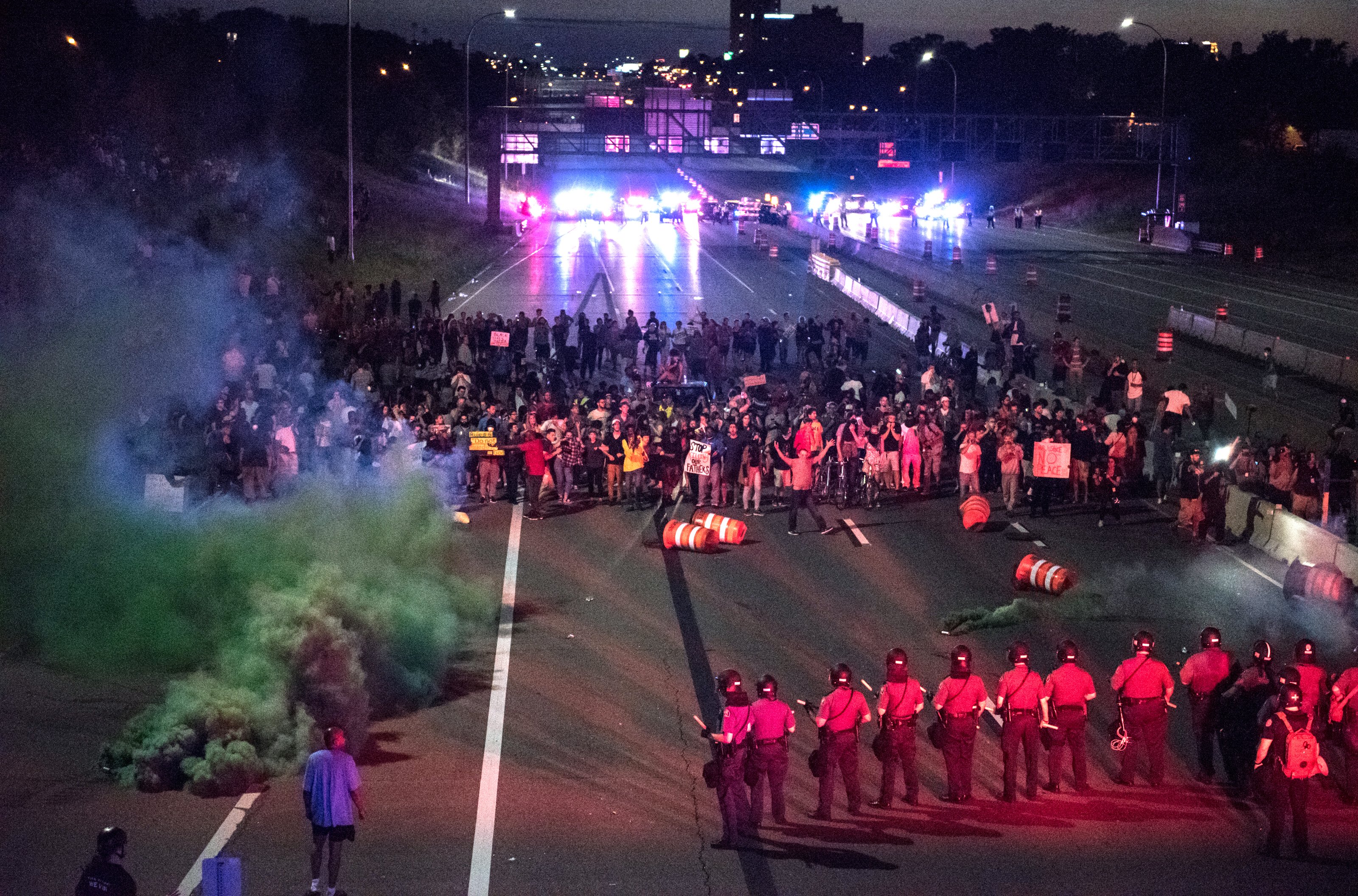
And for Axtell, the biggest challenge was the July 9 confrontation on I-94. Spence said he saw people peacefully demonstrating, but he also saw people he didn’t recognize. He pegged them as professional agitators because they were wearing gas masks. Someone threw a rock, striking Spence in the leg and cutting him, and he left. Tensions escalated.
In the end, 21 officers were injured by rocks and projectiles thrown at them. Police used smoke grenades and blast balls that produced flashes and bangs, and state troopers arrested 50 people on the highway.
Other African-American leaders in St. Paul, Coleman and the police union president agree that Axtell has risen to the occasion in the national spotlight. Yet there were those who were rankled by Axtell’s and Coleman’s description of what happened on I-94 as a “riot.”
St. Paul Police Chief Todd Axtell, center, joined by St. Paul Mayor Chris Coleman, left, and and Minnesota State Patrol Col. Matt Langer, speak about protests July 9. On the table in front of them were rocks and rebar that they said were thrown at officers. (Pioneer Press: Mara H. Gottfried)
Police chiefs often walk a tight-rope between appeasing the public and rank-and-file officers, but Axtell said he does not make statements based on what he thinks people want to hear.
“I base what I say on what I believe at the time I say it,” Axtell said this past week while reflecting on his first month on the job. “When our officers come under attack, you can guarantee I will come out with some strong statements in support of our public servants, and I will never apologize for that.
“It’s also important that I come out and continue to build strong relationships with all of our diverse communities in St. Paul and make sure that they have a voice at the St. Paul police department.”
FIVE BLOCKS AWAY
Axtell often talks about making “deposits into the bank of trust.” He explains: “It’s not a matter of if something controversial happens, but when. And when those controversies happen, you must have a full bank of trust with our diverse communities.”
On Axtell’s 14th day as police chief, it happened — just not in St. Paul. It was about five blocks away, in Falcon Heights, where a St. Anthony police officer shot Castile during a traffic stop.
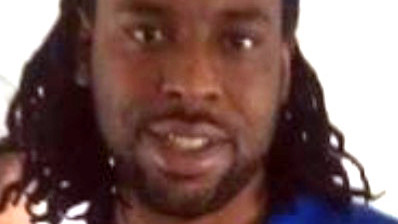
Philando Castile (Courtesy photo)
The case drew instant national attention as Castile’s girlfriend live-streamed the aftermath of the shooting on Facebook.
Tyrone Terrill, president of the African American Leadership Council, said he was horrified by the video. He knew protests would follow.
“You couldn’t help but be angry as a community when you see what happened,” Terrill said.
But he did not expect the protests would be so focused on St. Paul. “I think Falcon Heights has gotten a pass, St. Anthony village has gotten a pass and that’s unfortunate,” Terrill said. “It’s all been St. Paul, St. Paul, St. Paul, and they’re not the police department responsible for his death.”
WALKING THE TIGHT ROPE
Within hours of Castile’s death, protesters set up outside the Governor’s Residence. St. Paul opened its Emergency Operations Center — used to coordinate multi-agency responses to anything from protests to a major storm to a presidential visit.
Axtell divided his time between the center, where he monitored all the police operations, and going into the field “to thank our officers, check on how they’re doing and stop at the various protest locations,” Axtell said.
There was little time for sleep. And no time to finish unpacking his office.
“I haven’t felt this level of constant stress in my career,” Axtell said. “But I find that it motivates me to do more.”
He was driven by a concern for his officers and for the city as a whole. He relies on his mantra that communication can help build relationships and move forward.
Dave Titus, St. Paul Police Federation president, said he watched as Axtell “rose to the occasion and supported his troops and represented the department well.”
“It was a very serious test, and I hope it’s an indication of how he will proceed,” Titus said.
WEIGHING IN ON THE RESPONSE
St. Paul police have grown accustomed to handling protests: Black Lives Matter has held peaceful, permit-less marches in the city since 2015. Demonstration have blocked traffic and transit and targeted major events like the State Fair and the Twin Cities Marathon.
After Castile’s death, the only aspect that caught St. Paul police off-guard was the violence that broke out during the July 9 shutdown of I-94, Axtell said. The next day, he and Coleman described the scene as a riot.
Erin Pavlica, who lives in St. Paul’s Hamline-Midway area, was disappointed by that characterization.
Police shoot smoke rounds after telling protesters to move off Interstate 94 near the eastbound Dale Street exit in St. Paul July 9. Traffic on the interstate was closed in both directions by a large group protesting the police shooting of Philando Castile. (Pioneer Press: Andy Rathbun)
“I felt like I was watching a different protest than they were. I did not see a riot,” said Pavlica, who watched a live stream of what was happening. She knows Castile’s uncle, so his death hit close to home.
Pavlica, who met Axtell when he was in charge of the police district where she lives, has always respected him. She is still looking forward to what he will do as chief.
“This was a very, very tough situation for him, but a lot of times this is how you see the true light or leadership of people, when they are put under pressure,” she said.
Law enforcement arrested 102 people between the highway and a march at Grand Avenue and Dale Street a few hours later. Prosecutors charged people arrested on the highway with third-degree riot.
Jordan Kushner, an attorney representing people who were charged, described the police response on the highway as excessive.
“They trapped the people on the highway and let the situation escalate with the people on the outside throwing objects,” he said. “And then they blamed the nonviolent peaceful protesters by charging them with riot when they had nothing to do with any sort of violence.”
But Axtell said police “gave multiple opportunities for everyone on the freeway to exit onto the Dale Street ramp.” He said his officers used “incredible restraint under a very dangerous and violent attack.”
Several leaders in the African-American community said they also regarded the St. Paul police response on the highway as restrained.
“To have firecrackers and rebar coming at officers and not even use tear gas?” Terrill said. “I doubt there are very many departments in America that would have done that.”
RAISING THEIR GUARD
The day after Castile was killed, Axtell ordered St. Paul officers to pair up. That evening, a sniper killed five officers working a protest march in Dallas. The suspect told authorities he was upset about the killings of Castile and Alton Sterling on July 5 in Baton Rouge, La. Then, on July 17, three officers were fatally shot in Baton Rouge.
People have left comments on the St. Paul police department’s Facebook page, such as, “What happened in Dallas should have happened in your city.” There hasn’t been a specific threat, though, Axtell said.
“I always err on the side of safety when we make those decisions,” Axtell said. He doesn’t know how long he’ll continue requiring two-person squads.
For the six days after Castile was killed, Axtell also implemented a schedule not used in St. Paul since the city hosted the Republican National Convention in 2008. Patrol officers worked 12 hours on, 12 hours off. The schedule increases the number of officers available to respond to regular calls and to protests.
Officers got little rest at that time, said Titus. He said they still feel demoralized by a negative climate toward law enforcement and need to be “hypervigilant” against possible threats, which is draining.
But there have also been moments that have bolstered Axtell’s and the officers’ spirits.
“I hear so many stories about officers not even being able to buy their meals when they go out because people are lining up, wanting to buy their food and thank them,” Axtell said.
SETTLING IN TO THE JOB
Before he got the job, Axtell set his priorities — reducing gun violence, diversifying the ranks and starting a community-engagement unit. He said he has started work on all of them, though not as much in the first month as expected.
He also has to contend with keeping his department within its nearly $110 million budget. Axtell said he is hoping the city will be able to get state or federal funding to cover rising protest costs, so he won’t have to make cuts.
And the protests continue.
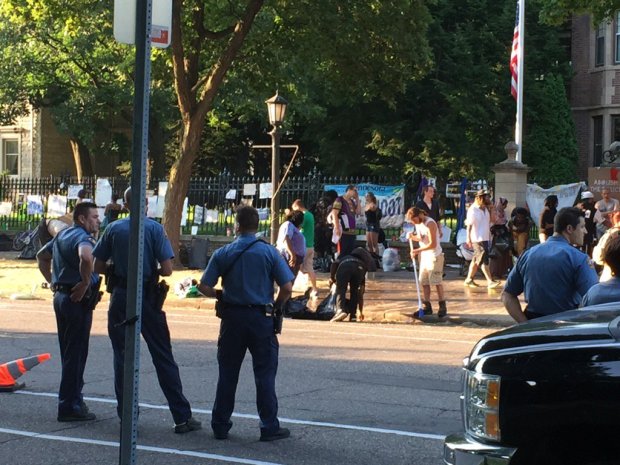
St. Paul police watch over the clearing of a protest encampment on July 18 in front of the Governor’s Residence in St. Paul. (Pioneer Press: Mary E. Divine)
The encampment outside the Governor’s Residence remains, with protesters saying they have no plans to leave. St. Paul police reopened the section of Summit Avenue in front of the mansion and closed its Emergency Operations Center on Monday.
Protesters outside the mansion have been upset about restrictions police have put on their encampment. But organizer Curtis Avent said he and Axtell have had productive conversations when the chief has come to talk with demonstrators.
“So far, he’s been a man of integrity in dealing with me and negotiating situations,” said Avent, of St. Paul. “I would be glad to see police-community relations improve and, if he’s the man to do that, then he’s who we want to work with to see it done.”
http://stpaulpolicefoundation.sbstrategies.com/wp-content/uploads/sites/55/2014/07/logo1.png00Melanie Gagehttp://stpaulpolicefoundation.sbstrategies.com/wp-content/uploads/sites/55/2014/07/logo1.pngMelanie Gage2016-07-25 19:50:262016-07-25 19:51:07Philando Castile protests: A baptism by fire for St. Paul’s new police chief
Check presentation to support the St. Paul Police Department and its community outreach efforts are part of annual golf tournament on June 11
Saint Paul, MN (June 10, 2014) - The St. Paul Police Foundation is proud to announce today they will present more than $17,000 to the St. Paul Police Department for additional safety equipment. The formal check presentations to SPPD Chief Tom Smith will take place at 5 p.m. on Thursday, June 11, as part of the Foundation’s annual golf tournament at Highland National Golf Course at Mancini’s Char House & Lounge in St. Paul.
Thursday’s donation includes nearly $7,000 in grants from the Foundation to the St. Paul Police Department’s Motorcycle Unit for Motoport suits that protect officers in the event of a motorcycle crash. In addition, the Foundation will present the department with more than $10,000 in funds from its Holiday Lights in the Park event which took place during the 2014 holiday season at Phalen Park. These funds will also be used to enhance safety for officers.
“We are extremely delighted to support the officers who work daily to keep our city safe,” said Kate Kelly, Executive Director of the St. Paul Police Foundation. “The hard work of our volunteers ensures that we are able to make donations of this magnitude. We look forward to doing this for many years to come.”
Kelly said plans are already in place for the 2015 edition of Holiday Lights in the Park which will run nightly from 5 to 10 p.m. between November 24, 2015 and January 1, 2016 at Phalen Park.
Since its inception in 2005, the Foundation has raised more than $2 million to help support numerous SPPD initiatives including providing life saving equipment, Shop with Cops, the Safe City Camera program, Cops and Kids program and a variety of resources for crime victims.
St. Paul Police Foundation Golf Tournament Photo Opportunity:
What: The St. Paul Police Foundation’s 3rd Annual Golf Tournament to raise funds and awareness for the SPPD.
When: Thursday, June 11, 2015. Formal check presentation at 5 p.m.
Where: Mancini’s Char House & Lounge 531 7th St W in St. Paul.
Who: For media event and tournament questions please contact Media Liaison Robb Leer at 612.701.0608 or Jane Canney at 651-291-2820.
About Holiday Lights:
Holiday Lights in the Park is a joint venture of the St. Paul Chapter of the National Electrical Contractors Association (NECA) and the St. Paul Police Foundation with the sole purpose of creating fun and affordable holiday events that raise funds to help meet basic life needs for children and adults in the Twin Cities metro area. All of the net proceeds of the event will be distributed to Union Gospel Mission, the Saint Paul Police Foundation, and the Saint Paul Parks Conservancy. To date, Holiday Lights in the Park has raised more than $366,000 to support local non-profit organizations that support the residents of the Twin Cities. Holiday Lights in the Park is open nightly each holiday season at Phalen Park. Visitors experience a program of more than 60 larger-than-life holiday light sculptures and animated displays from the comfort of their vehicles as they cruise through the park in the evening hours. For more information please visit our website: http://www.saintpaulpolicefoundation.com/, or you can find us on Facebook: https://www.facebook.com/stpaulpolicefoundation or follow us on Twitter: https://twitter.com/StPaulPoliceFdn
CONTACTS:
Robb Leer, media liaison Holiday Lights in the Park 612.701.0608 [email protected]
Jane Canney, interim executive director Saint Paul Police Foundation 651-291-2820 [email protected]
###
http://stpaulpolicefoundation.sbstrategies.com/wp-content/uploads/sites/55/2014/07/logo1.png00saintpaulpolicehttp://stpaulpolicefoundation.sbstrategies.com/wp-content/uploads/sites/55/2014/07/logo1.pngsaintpaulpolice2015-06-10 18:06:462015-08-03 14:15:07St. Paul Police Foundation Presents Check to the St. Paul Police Department at Golf Tournament
Somewhere along an upstate New York interstate, two semi trucks full of holiday light displays bound for St. Paul’s Phalen Park are waiting for one of the most prolific snowstorms in history to pass. More than 100 people were expected to help set up the displays Friday. Instead, about half that number worked to prepare what they could ahead of the displays’ arrival. The holiday light debut set for Tuesday won’t be affected, according to event officials.
http://stpaulpolicefoundation.sbstrategies.com/wp-content/uploads/sites/55/2014/11/Screen-shot-2014-11-22-at-6.49.42-AM.png5301048Melanie Gagehttp://stpaulpolicefoundation.sbstrategies.com/wp-content/uploads/sites/55/2014/07/logo1.pngMelanie Gage2014-11-22 12:53:302014-11-22 12:53:30Holiday of Lights in the Park displays get stranded in snowbound New York